Bay Area, California Office 510-409-1989 | Phoenix, Arizona Office (480) 773-1118
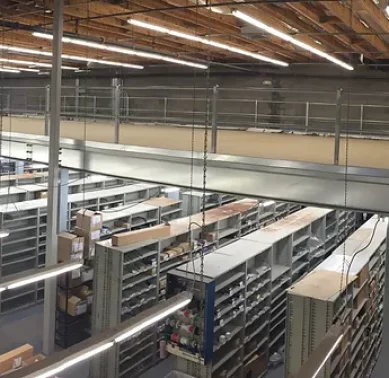
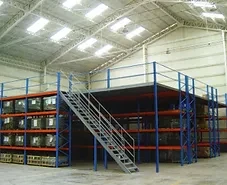
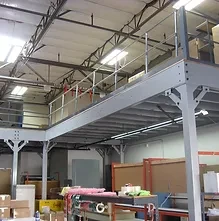
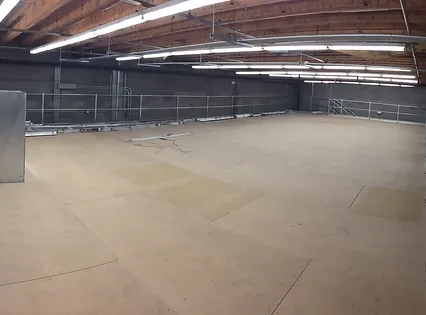
In industrial applications, mezzanine floor systems are semi-permanent floor systems typically installed within buildings, built between two permanent original stories. These structures are usually free standing and in most cases can be dismantled and relocated. Commercially sold mezzanine structures are generally constructed of three main materials; steel, aluminum, and fiberglass. The decking or flooring of a mezzanine will vary by application but is generally composed of b-deck underlayment and wood product finished floor or a heavy duty steel, aluminum or fiberglass grating.
The mezzanine is often used in shops and similar spaces for storage of tools or materials. The high roof of the shop is ideal for a mezzanine, and offices can be put either below or above it. Mezzanines are frequently used in industrial operations such as warehousing, distribution or manufacturing. These facilities have high ceilings, allowing unused space to be utilized within the vertical cube. Industrial mezzanine structures are typically either structural, roll formed, rack-supported, or shelf-supported, allowing high density storage within the mezzanine structure.
Servicing Northern California, the Bay Area , Sacramento and Reno markets since 1992. Our portfolio includes projects in Fairfield, Foster City, Daly City, Fremont, Hayward, Newark, Union City, Sacramento, San Jose, San Francisco, Oakland, Milpitas, Livermore, Palo Alto, Mountain View, Stockton, Lodi, Modesto, Vacaville. Also providing solutions to the Phoenix, Arizona market, surrounding metro of Maricopa County and submarkets of Arizona: Buckeye, Chandler, Gilbert, Goodyear, Mesa, Tempe, Scottsdale, Glendale, Peoria, Tolleson, Tucson, Nogales and Casa Grande
Our portfolio of projects have included: automated systems, ASRS (automated storage and retrieval), archive rack, archive shelving, boltless rack, boltless shelving, cantilever rack, carton flow, cold storage, conveyor systems, dock leveler, high density storage, loading dock equipment, lockers, mezzanines, mobile aisle systems, in-plant modular office, pallet rack, pallet flow, pushback rack, industrial shelving, jib crane, gantry crane, rivet shelving, wire shelving, racks, material handling equipment, industrial shelving, scissor lift tables, storage shelving, metal shelving, storage rack, vertical lift modules, work benches.
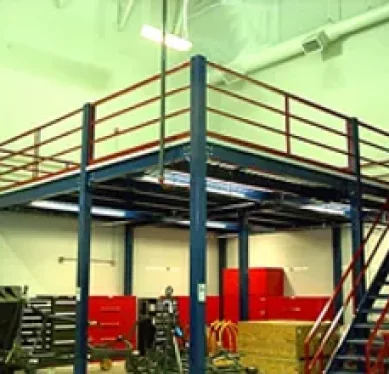
A structural mezzanine is a semi-permanent floor system typically installed within buildings, built between two permanent original stories. These structures are usually freestanding and can be dismantled and relocated in most cases. They effectively double your usable floor space by utilizing vertical space within your facility.
Commercial mezzanine structures are generally constructed from three main materials: steel, aluminum, and fiberglass. The decking or flooring varies by application but is typically composed of B-deck underlayment with a wood product finished floor, or heavy-duty steel, aluminum, or fiberglass grating.
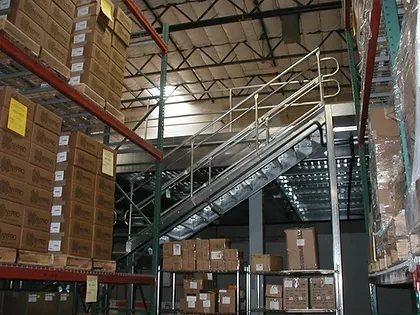
We offer both freestanding mezzanines and rack-supported mezzanines. Freestanding mezzanines allow for full use of floor space and complete utilization of the mezzanine level. Rack-supported mezzanines use the structure of pallet rack uprights and beams to support the mezzanine platform, providing an integrated storage and elevated work area solution.
Yes, we are a turnkey provider that handles design, integration, permitting, and installation. We also address lighting and sprinkler requirements to ensure your mezzanine system meets all building codes set by your municipality.
Yes, in most cases mezzanines are designed as semi-permanent structures that can be dismantled and relocated. This provides flexibility as your business needs change or if you move to a different facility.
Mezzanines are used for a variety of applications including additional storage space, elevated work areas, office space above warehouse floors, parts storage (commonly in auto dealerships), and manufacturing operations that benefit from multi-level workflows.